
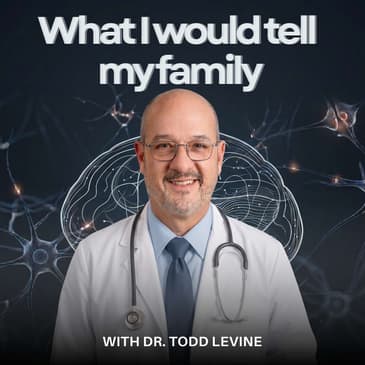
Welcome back to What I’d Tell My Family. In today’s episode, Dr. Todd Levine explores a frequently misunderstood and commonly misdiagnosed condition: dementia with Lewy bodies. Affecting over a million Americans, this form of dementia stands out for its early visual hallucinations, fluctuating cognition, and symptoms that often mimic psychiatric disorders or even Alzheimer’s disease. Dr. Levine breaks down how Lewy body dementia is different at a cellular level, the warning signs families should watch for, and why accurate diagnosis is critical, not just for effective treatment, but to avoid dangerous drug reactions. Whether you have a loved one struggling with memory loss or want to learn about the latest advances in diagnosis and care, this episode offers expert advice and hope for planning a better quality of life, even after a difficult diagnosis.
Timestamps:
00:00 Understanding Lewy body dementia
06:06 Early symptoms of Lewy body dementia
09:52 Link between REM disorder and brain diseases
11:59 Early signs of Lewy body dementia
15:11 Alzheimer's misdiagnosis risks
18:58 Initial dementia evaluation process
24:45 Planning for a fulfilling future
27:59 Medications for Lewy body dementia
31:02 Diagnosing and tracking dementia progress
33:15 Upcoming episode on skin tests
Understanding Lewy Body Dementia: Takeaways from What I’d Tell My Family Podcast
Lewy body dementia remains one of the most misunderstood forms of dementia in the United States, often misdiagnosed as Alzheimer’s or psychiatric illness. In the insightful episode “What I’d Tell My Family,” Dr. Todd Levine sheds light on the intricacies of this challenging condition, sharing his expertise and practical advice for families and care providers alike. Here are the key insights from the episode to deepen your understanding and help you or your loved ones navigate the road ahead.
What Is Lewy Body Dementia?
Dr. Todd Levine begins by clarifying that dementia is an umbrella term for diseases causing progressive cognitive decline. Lewy body dementia is actually the second most common form of dementia after Alzheimer’s, yet few people are aware of it or grasp its unique nature. Unlike Alzheimer’s, which is driven by amyloid and tau protein buildup, Lewy body dementia results from the accumulation of a different protein called alpha-synuclein. These proteins clump together to form Lewy bodies, named after the French pathologist who discovered them. This buildup damages nerves critical for memory, behavior, and movement, distinguishing Lewy body dementia at a cellular level from other dementias.
Early Signs and Mistaken Diagnoses
One of the most striking features of Lewy body dementia, according to Dr. Todd Levine, is the early onset of hallucinations and changes in behavior, which tend to appear before significant memory loss sets in. Patients may misinterpret everyday objects—a lamp might look like a person, or a stuffed animal could be seen as real, which often leads families and even doctors to suspect psychiatric conditions over neurological ones. Since psychiatric illnesses like schizophrenia usually emerge before the age of thirty and Lewy body dementia affects individuals in their fifties or sixties, this late-onset psychosis is a critical clue.
Fluctuating cognition is another hallmark: patients may seem clear and present one moment and confused or withdrawn the next. These big swings can make it easy to misinterpret the symptoms as mood disorders or psychiatric issues, delaying appropriate diagnosis and care.
REM Sleep Behavior Disorder: An Early Warning
Another early red flag mentioned by Dr. Todd Levine is REM sleep behavior disorder. People with this disorder act out their dreams, sometimes violently, because their brains fail to induce sleep paralysis during REM sleep. This condition is closely linked with alpha-synuclein buildup and is often a precursor to Lewy body dementia or Parkinson’s disease. Families observing this behavior should consider it a warning sign and consult a neurologist.
Why Accurate Diagnosis Matters
Misdiagnosis has significant consequences. Patients with Lewy body dementia are often mistakenly treated for Alzheimer’s or psychiatric conditions, sometimes receiving medications that may worsen their symptoms. Dopamine-blocking drugs commonly used for psychosis can trigger severe, even life-threatening reactions in those with Lewy body dementia. Dr. Todd Levine highlights the importance of precision medicine and discusses advanced diagnostic options, including MRI scans, blood tests for Alzheimer’s, and groundbreaking tests for alpha-synuclein via skin biopsy or spinal fluid. Thanks to these new biomarkers, doctors can distinguish Lewy body dementia from similar conditions more accurately than ever before.
Treatment, Lifestyle, and Hope
While there is currently no cure to halt or reverse Lewy body dementia, Dr. Todd Levine emphasizes that lifestyle choices can help slow disease progression and improve quality of life. Diet, exercise, socialization, and good sleep contribute to overall wellness. Some medications can temporarily boost cognition and provide a better quality of life for a year or two.
Perhaps most importantly, Dr. Todd Levine advises families to focus on planning for meaningful activities and maintaining hope. Knowledge, he says, is power: understanding the specific diagnosis empowers families to make better decisions and provide the best possible care.
Final Thoughts and Next Steps
If you or a loved one suspects Lewy body dementia, seek out a neurologist familiar with cognitive and behavioral neurology. Discuss symptoms openly, including movement changes, hallucinations, and sleep disturbances. Ask about specific diagnostic tests for Lewy body dementia to ensure the right diagnosis and avoid potentially harmful medications.
For more detailed information and compassionate advice, tune in to What I’d Tell My Family with Dr. Todd Levine, a valuable resource for anyone facing the complexities of dementia.
Dr. Todd Levine on LinkedIn - https://www.linkedin.com/in/todd-levinemd/
Neuro Concierge - https://neuro-concierge.com/
Podcast - https://what-id-tell-my-family.beam.ly/
What I´d Tell My Family Podcast on LinkedIn - https://www.linkedin.com/company/what-id-tell-my-family/
Podcast Partner - https://www.tophealth.care/
“Disclaimer: Informational only. Not medical advice. Consult your doctor for guidance.”